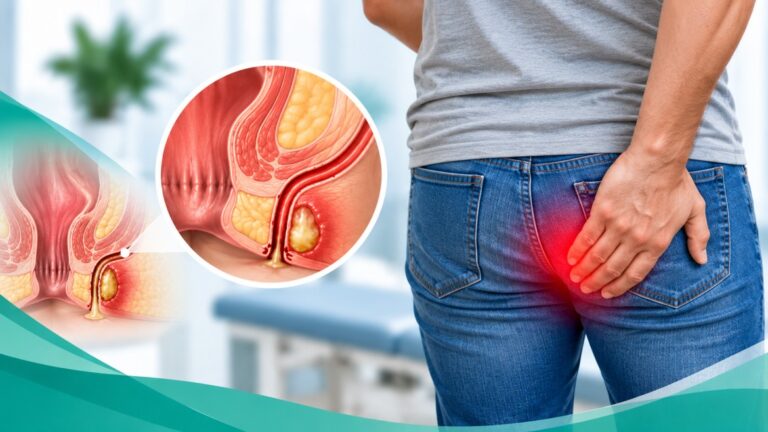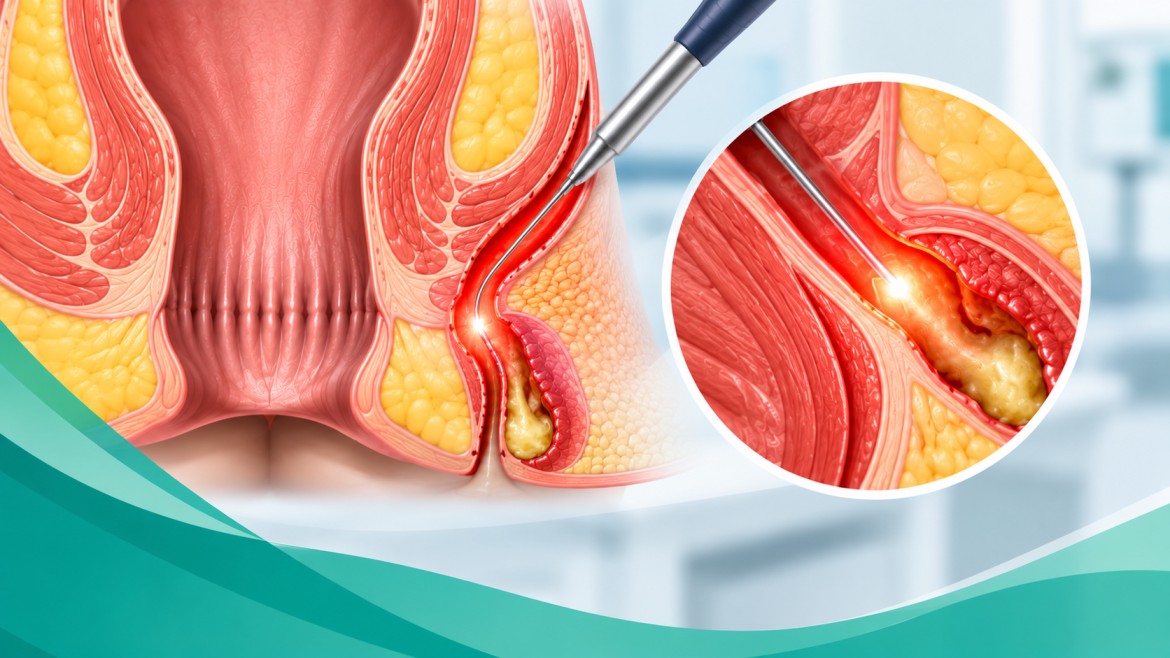
Laser fistula treatment is a minimally invasive approach used for selected cases of anal fistula. The procedure uses a laser fibre to treat the fistula tract from inside, with the aim of closing the abnormal passage while limiting disruption to surrounding tissue. However, laser treatment is not suitable for every fistula. The location, complexity and […]
Laser fistula treatment is a minimally invasive approach used for selected cases of anal fistula. The procedure uses a laser fibre to treat the fistula tract from inside, with the aim of closing the abnormal passage while limiting disruption to surrounding tissue.
However, laser treatment is not suitable for every fistula. The location, complexity and relationship of the fistula with the anal sphincter muscles need to be assessed before deciding on the appropriate treatment.
What Is Laser Fistula Treatment?
Laser fistula treatment uses a thin laser fibre that is introduced into the fistula tract. Laser energy is then used to treat the inner lining of the tract and encourage it to close and heal.
The exact technique and suitability depend on the individual fistula and the surgeon’s assessment.
Anal fistulas usually develop after an infection or abscess near the anus. When the abscess drains but the abnormal passage does not heal completely, a fistula may remain.
Who May Need Fistula Treatment?
An established anal fistula generally requires medical evaluation because it does not usually disappear on its own.
A doctor may recommend treatment when a patient has symptoms such as:
- Repeated pus or fluid discharge
- Recurring swelling around the anus
- Pain or discomfort
- Repeated abscesses or infections
- A small opening near the anus
- A wound that does not heal
- Persistent irritation or foul-smelling discharge
The treatment approach depends on the anatomy and complexity of the fistula. :chatgpt-content-reference{index=”0″}
How Does Laser Fistula Treatment Work?
Step 1: Evaluation
The doctor first evaluates the fistula and determines its location and complexity.
Step 2: Identifying the Fistula Tract
The fistula tract is identified so that the treatment can be directed appropriately.
Step 3: Laser Fibre Placement
A thin laser fibre is introduced into the fistula tract.
Step 4: Laser Treatment
Laser energy is delivered along the tract to treat the abnormal tissue and encourage closure.
Step 5: Recovery and Follow-Up
After the procedure, the patient receives instructions regarding wound care, hygiene, activity and follow-up.
The exact procedure and recovery plan can vary depending on the individual case.
Potential Benefits of Laser Fistula Treatment
Laser treatment may offer certain advantages for appropriately selected patients.
- Minimally invasive approach
- Small treatment area
- Potentially less tissue disruption
- Focus on preserving surrounding structures
- May allow relatively quick recovery in selected cases
Laser treatment is designed to avoid extensive cutting of the sphincter muscles, but the suitability and expected benefits vary according to fistula anatomy. :chatgpt-content-reference{index=”1″}
Is Laser Treatment Suitable for Every Fistula?
No.
Anal fistulas can vary significantly in their location and complexity. Some fistulas are simple, while others may involve a significant portion of the anal sphincter muscles or have multiple branches.
For complex fistulas, other approaches such as seton treatment, LIFT or other sphincter-preserving procedures may be considered.
The treatment decision should therefore be based on an individual clinical evaluation rather than choosing a procedure solely because it uses laser technology. :chatgpt-content-reference{index=”2″}
Laser Fistula Treatment vs Fistulotomy
| Feature | Laser Treatment | Fistulotomy |
|---|---|---|
| Approach | Laser treatment of the fistula tract | Opening the fistula tract surgically |
| Muscle preservation | Designed to minimize disruption to surrounding tissue | May involve some sphincter muscle depending on the fistula |
| Suitability | Selected fistula cases | Often considered for suitable simple or low fistulas |
| Recovery | Depends on the individual procedure and condition | Depends on the size and depth of the treated tract |
Fistulotomy is commonly used for suitable fistulas that do not involve a large amount of sphincter muscle. Other procedures may be preferred when cutting the muscle could create a higher risk of bowel-control problems. :chatgpt-content-reference{index=”3″}
Laser Fistula Treatment Recovery
Recovery varies from person to person and depends on the complexity of the fistula and the treatment performed.
Your doctor may recommend:
- Keeping the treated area clean
- Following wound-care instructions
- Maintaining adequate fluid intake
- Eating a fibre-rich diet where appropriate
- Taking prescribed medicines as directed
- Gradually returning to normal activities
- Attending scheduled follow-up appointments
Some patients may experience mild soreness or discharge during healing. Your treating doctor should advise you about what is expected in your particular case.
Possible Risks and Limitations
Like other fistula treatments, laser treatment has potential risks and limitations.
These may include:
- Infection
- Bleeding
- Incomplete healing
- Recurrence of the fistula
- Need for additional treatment
Evidence regarding the effectiveness of laser treatment varies, and treatment outcomes can depend on fistula type and patient selection. :chatgpt-content-reference{index=”4″}
When Should You Consult a Doctor?
Consult a qualified doctor if you experience:
- Repeated pus or fluid discharge
- Persistent swelling
- Recurring pain around the anus
- Repeated abscesses
- A wound or opening that does not heal
- Foul-smelling discharge
Early evaluation can help determine the location and complexity of the fistula and identify an appropriate treatment approach.
Laser Fistula Treatment at Janta Piles Clinic
Janta Piles Clinic provides evaluation and treatment options for patients experiencing fistula symptoms.
Laser treatment may be considered for selected patients after appropriate assessment.
To understand whether laser treatment may be appropriate for your condition, consult a qualified doctor.
Explore Fistula Treatment | Find a Clinic | Book an Appointment
Frequently Asked Questions
What is laser fistula treatment?
It is a minimally invasive technique that uses a laser fibre to treat the fistula tract from inside and encourage it to close.
Is laser treatment suitable for every fistula?
No. Suitability depends on the location, anatomy and complexity of the fistula.
Is laser fistula treatment painful?
The amount of discomfort varies depending on the procedure and individual patient. Your doctor can explain what to expect based on your treatment plan.
Can fistula come back after laser treatment?
Yes. Recurrence is possible with fistula treatment, and some patients may require additional treatment.
How long does recovery take after laser fistula treatment?
Recovery varies depending on the individual condition and procedure. Your doctor will provide personalized recovery instructions.
Is laser better than fistulotomy?
There is no single treatment that is best for every fistula. The appropriate procedure depends on the location, complexity and relationship of the fistula with the sphincter muscles.