Piles Treatment
Piles, also known as hemorrhoids, can cause bleeding, pain, itching, swelling and discomfort during everyday activities. At Janta Piles Clinic, we provide personalized evaluation and advanced treatment options for piles based on your symptoms, condition and severity.
Our approach focuses on accurate diagnosis, appropriate treatment and patient comfort, with minimally invasive options available when clinically suitable.
What Are Piles?
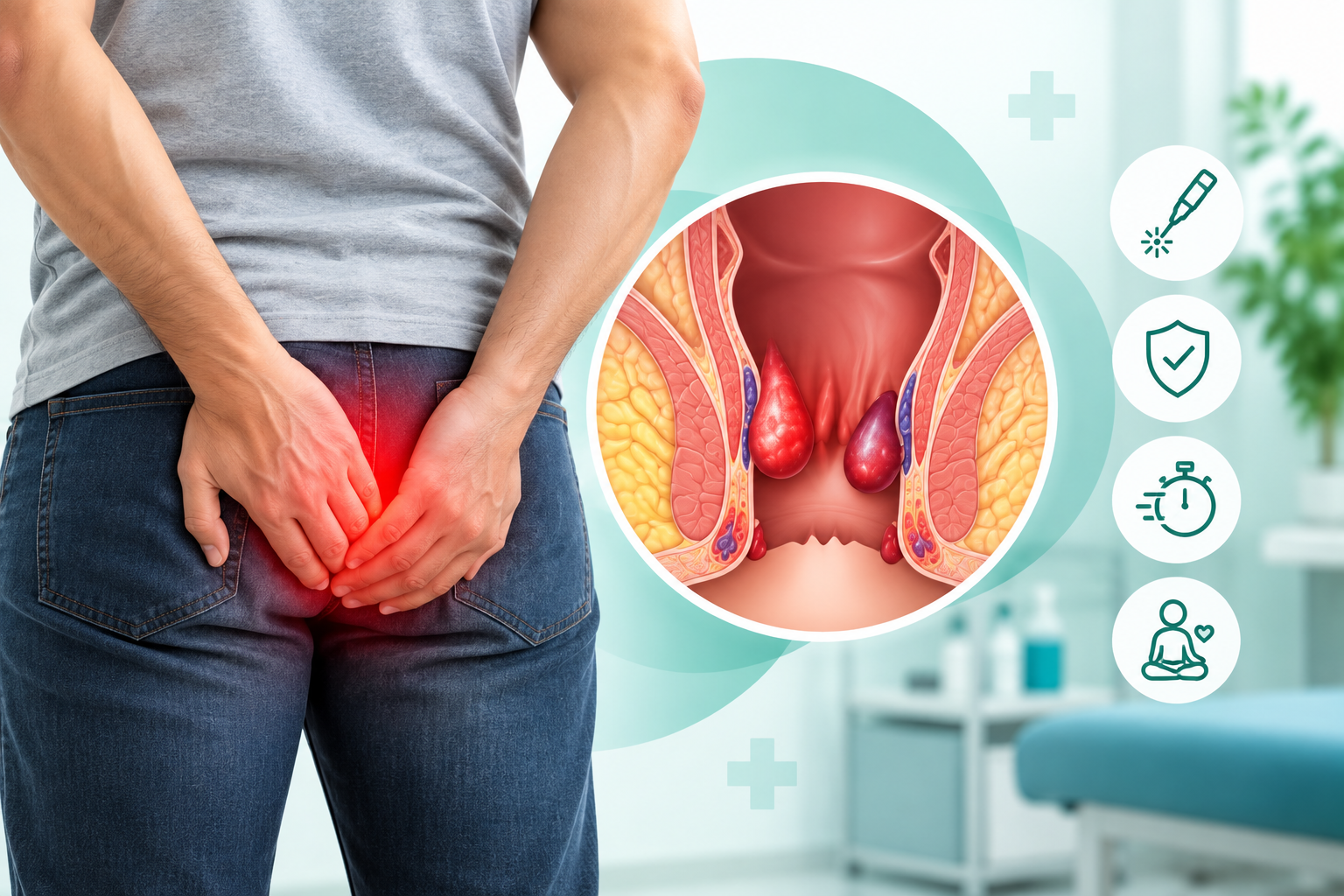
Piles, medically known as hemorrhoids, are swollen blood vessels and supporting tissues around the anus and lower rectum.
They may occur when increased pressure affects the blood vessels and tissues in this area. Constipation, straining during bowel movements and prolonged sitting on the toilet are among the factors that can contribute to piles.
Piles may cause symptoms ranging from mild discomfort to persistent bleeding, pain or swelling.
There are two commonly described types:
Internal Piles
Internal piles develop inside the rectum. They may not always cause pain, but bleeding during or after bowel movements can occur.
External Piles
External piles develop underneath the skin around the anus. They may cause swelling, irritation, itching and pain, particularly when a blood clot develops.
Symptoms
Common symptoms include:
- Bleeding during or after passing stool
- Pain or discomfort around the anus
- Itching or irritation
- Swelling around the anal area
- A lump or bulge near the anus
- Discomfort while sitting
- Feeling of incomplete bowel evacuation
- Mucus discharge in some cases
Causes
Constipation
Hard stools can increase pressure during bowel movements and may contribute to piles.Straining During Bowel Movements
Repeated or excessive straining can put additional pressure on the veins and tissues around the rectum.Prolonged Toilet Sitting
Spending excessive time sitting on the toilet can increase pressure around the anal region.Low-Fibre Diet
Insufficient dietary fibre can contribute to constipation and harder stools.Inadequate Fluid Intake
Not drinking enough fluids can contribute to harder stools and constipation.Lack of Physical Activity
A sedentary lifestyle may contribute to bowel irregularities and constipation.Frequent Diarrhoea
Repeated loose motions can irritate the anal area and may contribute to symptoms.Pregnancy
Increased pressure in the pelvic and abdominal area during pregnancy can contribute to hemorrhoids.Increased Abdominal Pressure
Factors that increase pressure around the abdomen and pelvic region can also contribute to piles.Treatment Options
1. Conservative Treatment
For mild symptoms, a doctor may initially recommend lifestyle and bowel-habit changes. These may include:- Increasing dietary fibre
- Drinking adequate fluids
- Avoiding excessive straining
- Improving bowel habits
- Staying physically active
- Avoiding prolonged toilet sitting
- Medicines when prescribed by a doctor
2. Laser Piles Treatment
Laser-based treatment is one of the minimally invasive treatment approaches used for selected piles cases. The procedure uses laser energy as part of the treatment approach and is designed to minimize tissue trauma compared with some conventional surgical approaches. Potential advantages may include:- Minimally invasive approach
- Small treatment area
- Reduced tissue trauma
- Less postoperative discomfort in appropriate cases
- Faster return to routine for selected patients