ABOUT THE TREATMENT
Fissure Treatment
What Is an Anal Fissure?
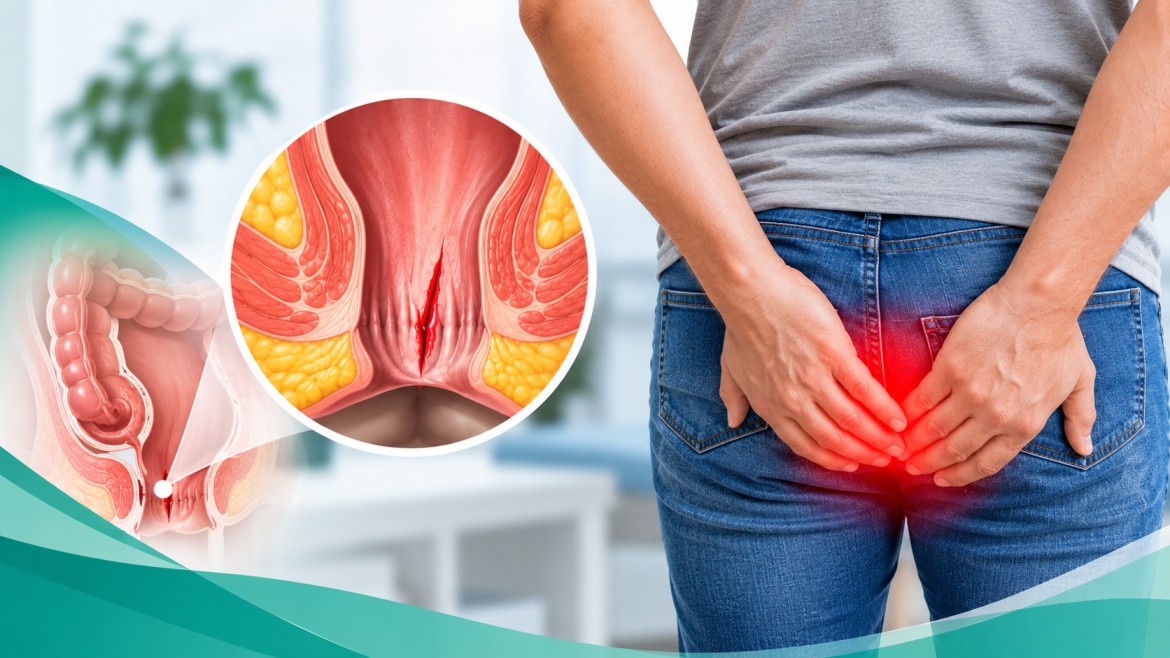
An anal fissure is a small tear or crack in the delicate tissue lining the anus. It commonly causes sharp or burning pain during bowel movements and may also result in bright-red bleeding, itching or irritation.
Fissures can develop after passing hard or large stools, particularly when constipation and straining are involved. Some fissures improve with appropriate bowel care and medical treatment, while persistent or recurring fissures may require further evaluation and treatment.
SYMPTOMS
Symptoms
The symptoms can vary depending on how long the fissure has been present and its severity.
Common signs include:
- Sharp pain while passing stool
- Burning or discomfort after bowel movements
- Bright-red bleeding
- Itching or irritation around the anus
- Visible crack or tear
- Anal muscle spasm
- Pain that continues after passing stool
- A small skin tag or lump in some long-standing cases
CAUSES
Causes
Several factors can contribute to the development of an anal fissure.
Constipation
Hard and dry stools can stretch and injure the delicate tissue.Passing Hard or Large Stools
Large or hard bowel movements can create excessive pressure around the anus.Excessive Straining
Repeated straining during bowel movements can increase pressure and irritation.Diarrhoea
Frequent loose stools can irritate the anal area and contribute to fissure formation.Low-Fibre Diet
Insufficient dietary fibre can contribute to constipation and harder stools.Inadequate Fluid Intake
Not drinking enough fluids can contribute to harder stools.Poor Toilet Habits
Ignoring the urge to pass stool or spending unnecessarily long periods on the toilet can contribute to unhealthy bowel habits.Pregnancy
Changes in bowel habits and increased pressure during pregnancy can also contribute to fissure.TREATMENT OPTIONS
Treatment Options
For recent or mild cases, treatment may initially focus on improving bowel movements and reducing irritation.
This may include:
- Increasing dietary fibre
- Adequate fluid intake
- Preventing constipation
- Avoiding excessive straining
- Improving toilet habits
- Warm-water soaks when recommended
- Medicines prescribed by a doctor
Medical Treatment
When symptoms continue, a doctor may prescribe medication to help manage pain, relax the muscles around the anal canal or support healing. The choice of medication depends on the patient's symptoms, medical history and examination.Advanced Fissure Treatment
When a fissure is persistent, recurrent or does not respond sufficiently to conservative treatment, a specialist may consider an appropriate procedure. The current Janta Piles Clinic page highlights several treatment approaches, including:RFA — Radio Frequency Ablation
An advanced treatment approach listed by Janta Piles Clinic for fissure management. Jantapiles ClinicLaser Fissure Treatment
A minimally invasive laser-based approach presented by Janta Piles Clinic as one of its fissure treatment options. Jantapiles ClinicBotox Injection Therapy
Botulinum toxin treatment may be used to relax anal muscles in selected cases. Jantapiles ClinicTopical Medication
Doctor-prescribed topical medicines may help relax the muscles and support healing in appropriate cases.Diet & Lifestyle Guidance
Managing constipation, improving fibre and fluid intake, and maintaining healthy bowel habits can be an important part of fissure management. Note: The appropriate treatment depends on the individual diagnosis and should be decided by a qualified doctor.PROCEDURE
Treatment Procedure
01 — Consultation
Discuss your symptoms, medical history and bowel habits with a qualified doctor. ↓02 — Diagnosis
The doctor evaluates your condition and determines the likely cause and severity. ↓03 — Personalized Treatment Plan
Treatment is selected according to your individual condition. ↓04 — Treatment
Appropriate medical, minimally invasive or other treatment is performed when required. ↓05 — Recovery & Follow-Up
Follow-up and bowel-care guidance help support recovery and reduce the risk of recurrence.FAQ